


When Addiction Doesn't Look Like Addiction

When Addiction Doesn't Look Like Addiction
When we think about addiction, we often have a very specific image in our minds.
Someone whose life has completely fallen apart. Someone who has lost their job, their relationships or their ability to function.
But addiction doesn't always look like that.

In my work as a psychotherapist, I think it's important to recognise that someone can be functioning very well on the outside while struggling significantly on the inside.
They can have a successful career, earn a good income, maintain relationships and appear completely in control.
They may even be the person everyone else relies on.
But behind closed doors, things can look very different.

Perhaps alcohol has become the way they switch off every evening.
Perhaps cocaine has become part of their working or social life.
Perhaps gambling has become increasingly difficult to control.
Perhaps they are using pornography, food, exercise, work or another behaviour to regulate how they feel.

The difficulty with this kind of addiction is that the person's external life can make it easier to convince themselves that there isn't really a problem.
"I'm still going to work."
"I'm successful."
"I pay my bills."
"I've got everything under control."
And perhaps, in many areas of their life, they do.
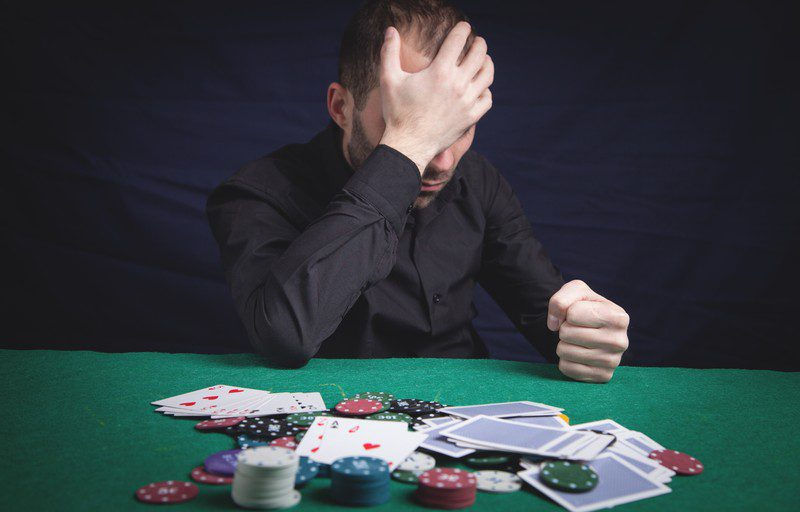
But addiction isn't necessarily measured by how successful someone appears to be.
It can be about the relationship they have developed with a substance or behaviour.
Can they stop when they want to?
Can they comfortably go without it?
Are they increasingly organising their life around it?
Are they hiding how much they are doing?
Are they experiencing consequences but continuing anyway?

These questions can be uncomfortable.
Particularly for people who are used to being capable, independent and in control.
Asking for help can feel like admitting that something has defeated us.
But I don't see it that way.
For me, asking for help can be an acknowledgement that a coping strategy which once served a purpose is no longer working in the same way.

And underneath the behaviour, there is often a person trying to manage something.
Stress.
Anxiety.
Loneliness.
Shame.
Emotional pain.
Pressure.

Sometimes the substance or behaviour isn't the whole story.
It may be the way someone has learned to manage everything else.
This is why psychotherapy can be useful in addiction work.
It allows us to look beyond the behaviour and begin to understand what is happening underneath it.

There is no need to wait until everything has fallen apart before asking for help.
Sometimes the most important moment is when someone quietly recognises:
"Something has changed. I'm not sure I'm in control of this anymore."
That recognition doesn't have to be the end of the story.
Addiction does not discriminate, it affects anyone from Park Lane to the Park bench. Realizing that
can be the beginning of your recovery.


Comments